The Project
Queer dramaturgy as an approach to archiving the experiences of Section 28 for LGBTQ+ students is a Practice as Research PhD project by queer theatre director Harry Mackrill. The research will examine the scar tissue left by Section 28 for those of the LGBTQ+ community who were educated under the act. The practice will develop a dramaturgy which archives these experiences. The research will look to how the legislation impacted the performance making practices of LGBTQ+ UK theatre artists and if traces remain in their work today.
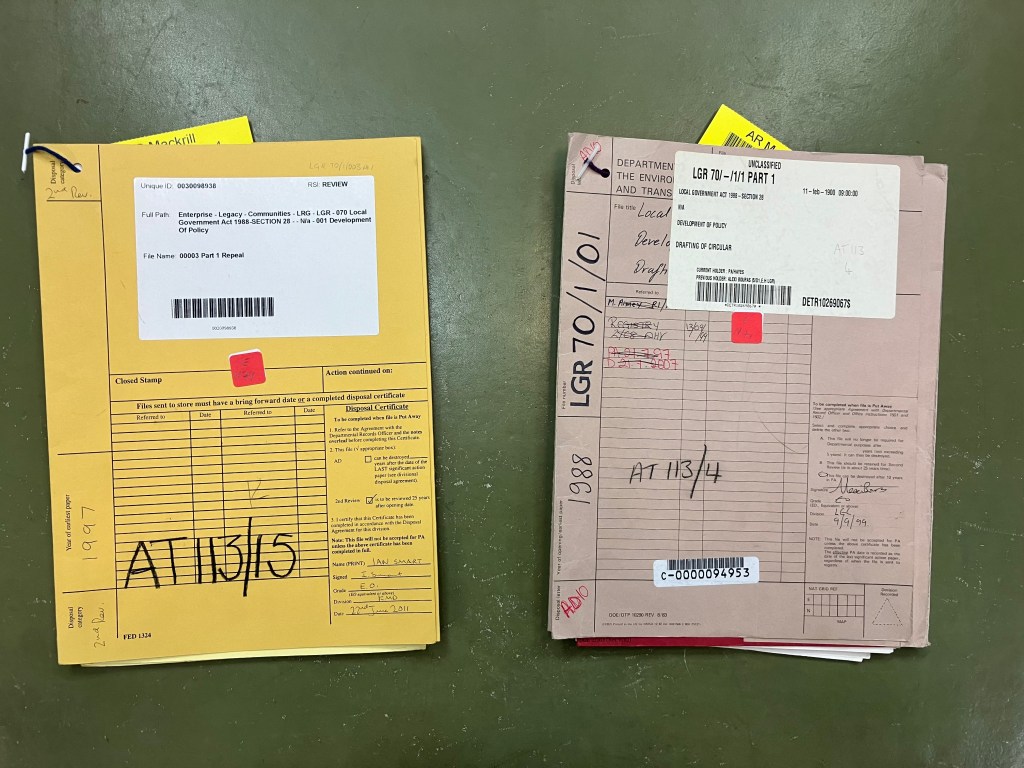
What was Section 28?
Section 28 of the Local Government Act 1988 legislated that Local Authorities shall not:
- Intentionally promote homosexuality or publish material with the intention of promoting homosexuality
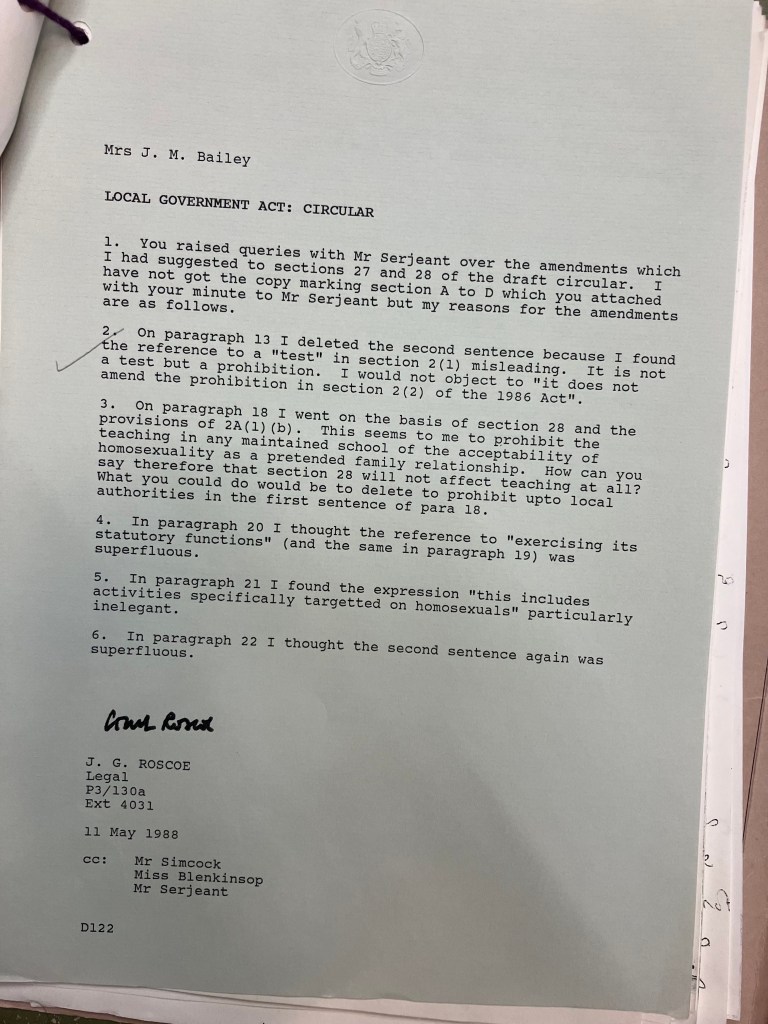
- Promote the teaching in any maintained school of the acceptability of homosexuality as a pretended family relationship
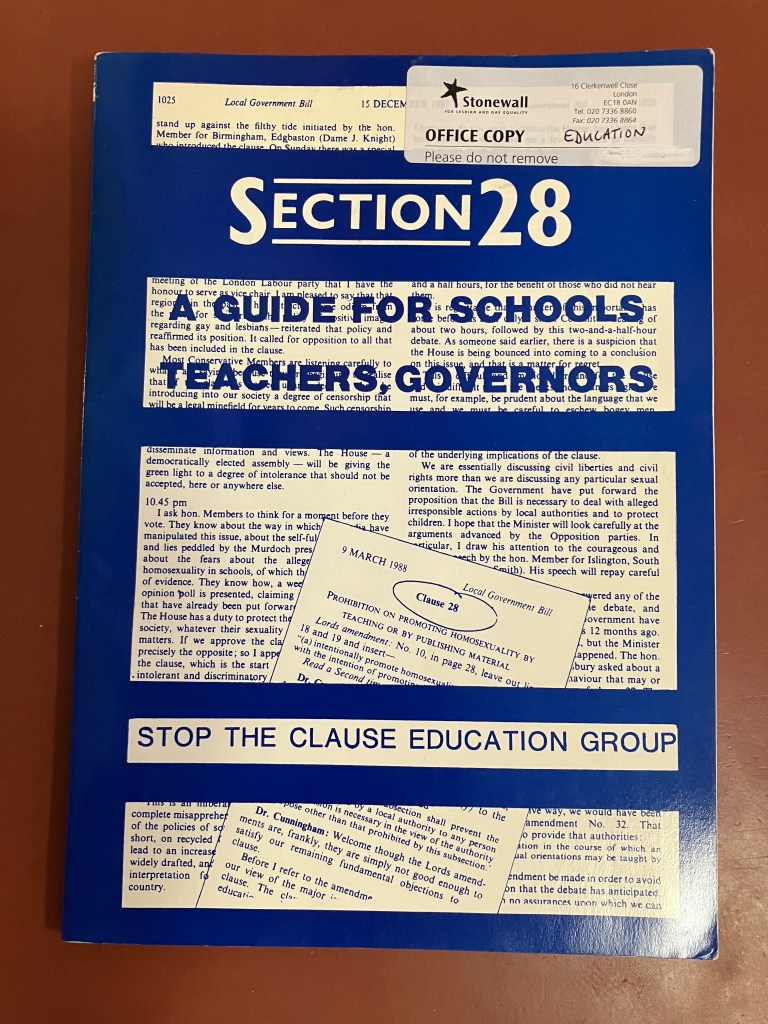
Queer activist, historian and sociologist Jeffrey Weeks (2016) has called Section 28 “perhaps as significant for lesbian and gay history as the 1885 Labouchere Amendment and the 1967 reform act” (238). The clause resulted in zero prosecutions, and it is acknowledged that its “impact lay in its symbolic value” (Weeks, 2016: 242). Research has found that the Act contributed to a “climate of fear and self-censorship” (Edwards et al, 2016) and “left a legacy of caution, self-censorship and complex identity management” (Lee, 2019) for LGBTQ+ teachers, institutionalised “a hierarchical relationship between heterosexuality and homosexuality” (Burridge, 2004: 329) and encouraged a climate of anti-queer bullying across British schools (ibid.).
This project acknowledges and celebrates the activism, protest and creative power of those who fought against Section 28. Yet the legislation lasted for fifteen years and impacted a generation of LGBTQ+ people. This project will attend to the gap in knowledge around the impact of Section 28 on performance practices in the UK for LGBTQ+ individuals educated under the Act.
Research Questions
1. In what ways can queer dramaturgy be used to research and archive the experiences of education under section 28 for LGBTQ+ identifying individuals?
2. How can queer dramaturgy operate as a research tool to explore the impact of section 28 on actor training in the UK for LGBTQ+ identifying individuals?
3. How can queer dramaturgy operate as a research tool to explore the impact of section 28 in the performance practice(s) of LGBTQ+ identifying individuals who trained as actors?
A Note on Practice
This research is rooted in a practice I shall term queer dramaturgy. Dramaturgy as the “totality of the performance-making process” (Trencsenyi & Cochrane, 2015: 9) and queerness as a locally contingent term that is “by definition whatever is at odds with normal, the legitimate, the dominant” (Halperin, 1995: 62).
Queer dramaturgy, in this context, uses the performance making process as a research tool that queers space to make the previously unknowable knowable. The spaces to be queered are theoretical, artistic and physical. The queer body can enter this dramaturgical space and stake a claim on the history and experiences of Section 28 for LGBTQ+ students educated under the act, meaning the project can, as Jose Esteban Munoz says, “look towards the past, critique the present and envision the future” (1999: 34).
The research is undertaken through Leeds Beckett University School of Arts. Dr Adele Senior is Director of Studies and Dr Mark Flisher is Supervisor. The project has partnered with Leicester Curve, Key Theatre Peterborough and Conway Hall.
 Queer Dramaturgy